For any restaurant, cafe, bar or dark kitchen in London, the arrival of an Environmental Health Officer (EHO) is a high-pressure moment.
An EHO can visit at any time during opening hours. These inspections are almost always unannounced, and officers do not need to book an appointment or give prior warning.
The purpose of these visits is to confirm that food safety standards are being met and that the premises are fit for purpose. How often an officer visits depends on the risk category of your business. This usually ranges from every six months for high-risk sites to every three years for lower-risk operations. Whether you are the owner, a manager, or a supervisor, you should operate on the basis that an inspection could happen on any day of the week.
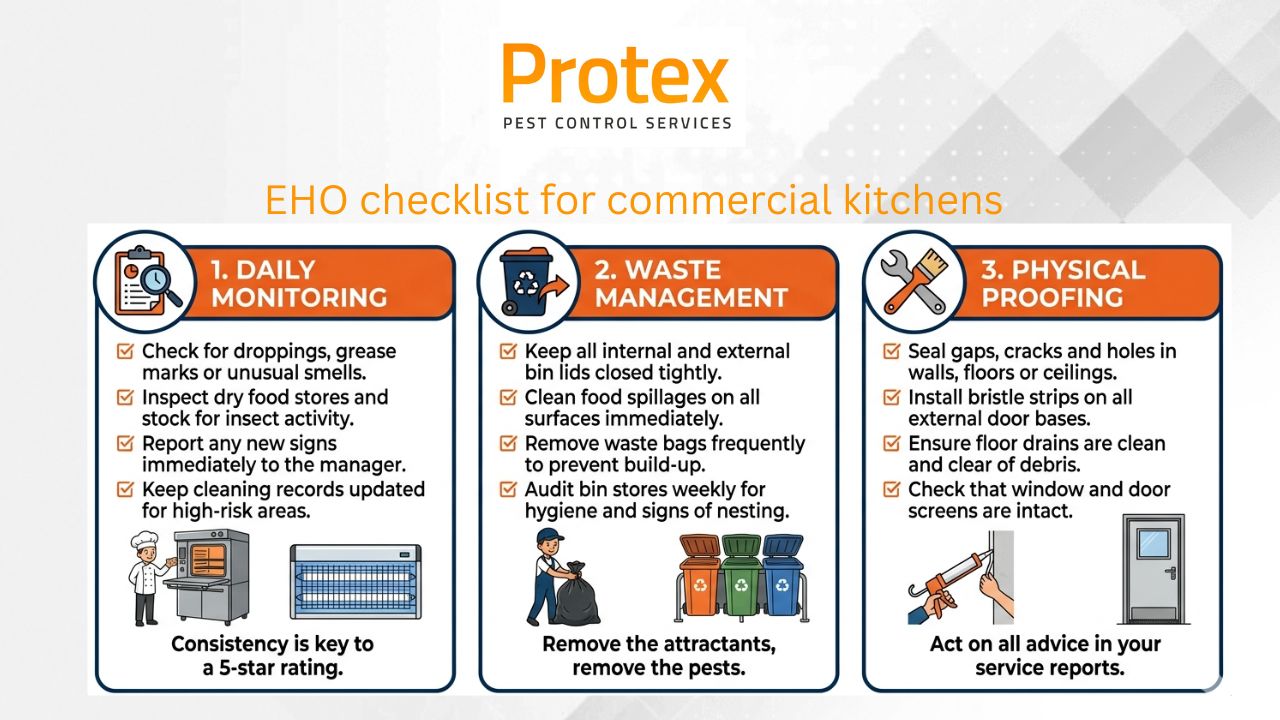
While their visit covers everything from food temperatures to allergen labelling, your pest control documentation is often one of the first things they will ask to see.
Under the Food Safety Act 1990 and the latest Food Safety and Hygiene (England) Regulations, a business must demonstrate due diligence. This means you cannot simply say you have no pests, you must prove you have a proactive system in place to prevent them. A lack of clear records and action can mean you miss out on a a five-star rating, and in the worst case an improvement notice is issued that could damage your reputation.
When the EHO reviews your pest control folder, they are looking for a continuous history of professional oversight. This should include:
The EHO will compare your paperwork to the reality of your kitchen. They will check behind heavy equipment and inside dry stores for signs of activity. They will also look at the proofing of the building.
If your reports show that a technician has repeatedly recommended a bristle strip for the back door, but the work has not been done, the EHO may view this as a failure of management. To pass every time, you must show that you have acted on the advice in your pest control reports.
Professional pest control in the food industry is not just about reacting to a problem. It is about maintaining a layered defence to protect your licence to trade. When we work with food businesses, our goal is to help you keep your food hygiene rating at the highest possible level.
By keeping your records up to date and your premises proofed against entry, you aren’t just preparing for an inspection, you are protecting your customers and your livelihood.